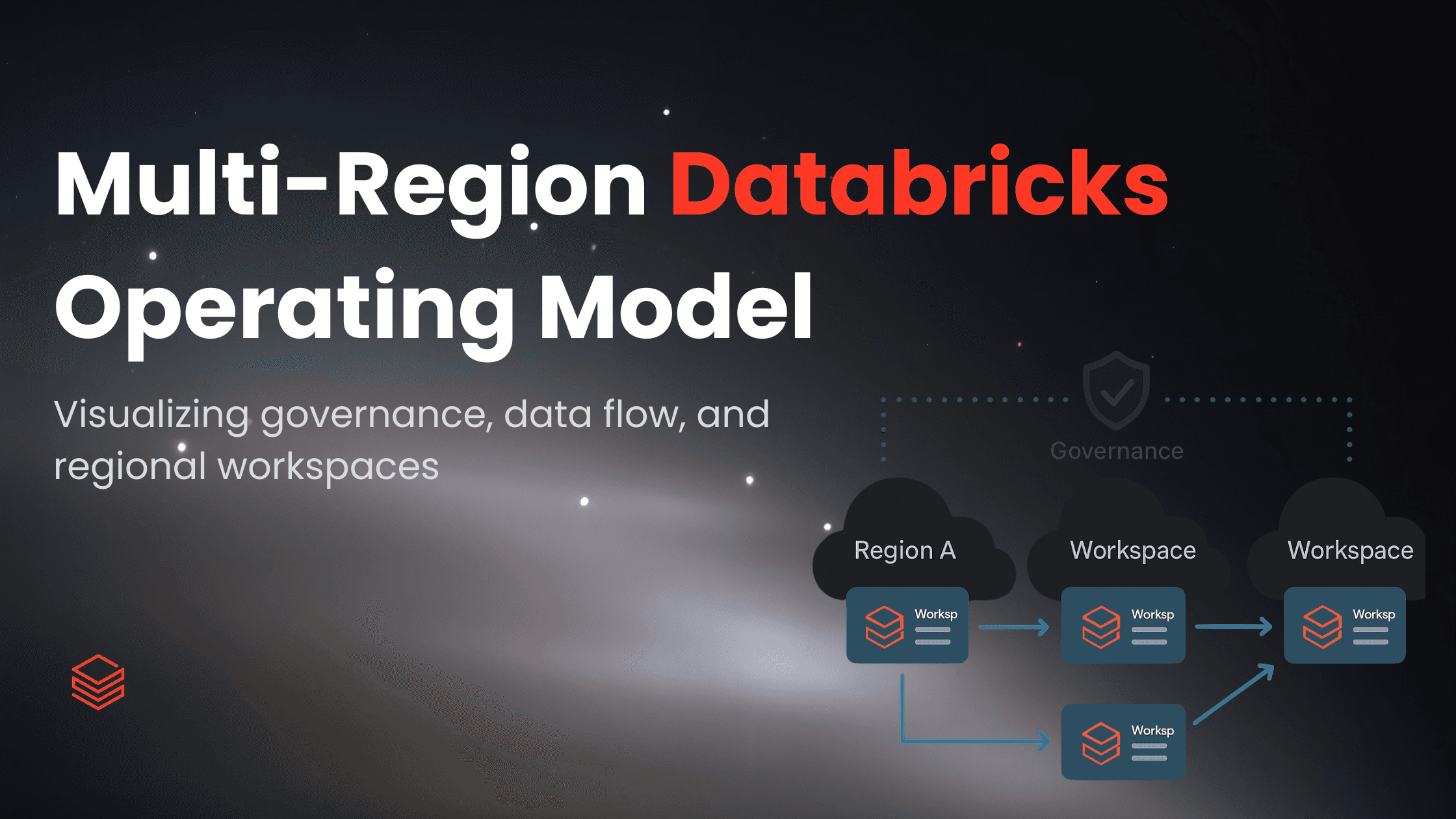
How to Plan Databricks Adoption for a Multi-Region Enterprise
Framework for multi-region Databricks adoption
Databricks has become a widely adopted platform for data engineering, analytics, and machine learning initiatives. For enterprises operating across multiple regions, adopting Databricks introduces additional considerations beyond basic platform setup. Differences in regulatory requirements, data residency expectations, network design, and team collaboration models all influence adoption success.
This article outlines a structured approach to planning Databricks adoption for multi-region enterprises, focusing on architecture, governance, operations, and long-term sustainability.
Understanding Multi-Region Requirements Early
Before any technical configuration begins, enterprise stakeholders should define what “multi-region” means in a practical sense. In some organizations, regions exist to support customer proximity. In others, they are driven by regulatory, operational, or disaster recovery requirements.
Key questions to clarify include:
- Which regions must host data and compute resources?
- Are regions active simultaneously or used as failover locations?
- Do regulatory policies restrict cross-border data movement?
- Are analytics and machine learning workloads centralized or region-specific?
Clear answers to these questions prevent misalignment during later implementation stages and inform architectural decisions across Databricks workspaces and cloud infrastructure.
Selecting a Regional Architecture Model
Databricks supports several architectural patterns suitable for global enterprises. Selecting the right model depends on regulatory constraints, collaboration needs, and operational maturity.
Centralized Control with Regional Execution
In this model, governance and metadata management remain centralized while compute and storage operate regionally. Central teams define standards, while regional teams execute workloads locally.
Federated Regional Model
Each region operates its own Databricks workspace with limited dependency on central systems. This model suits organizations with strict data residency requirements or independently managed business units.
Hybrid Model
Governance, reference data, and shared assets remain centrally defined, while region-specific datasets and analytics operate locally. This approach balances oversight with regional autonomy.
The chosen model should remain consistent across environments to reduce operational complexity.

Cloud Infrastructure and Network Planning
Databricks runs on major cloud platforms, and multi-region adoption requires deliberate cloud design.
Important considerations include:
- Separate cloud accounts or subscriptions per region
- Network peering between regions only when policy allows
- Private endpoints for data sources and analytics tools
- Consistent identity federation across regions
Latency-sensitive workloads should execute close to data sources. Cross-region access should be limited to governance metadata and approved shared datasets rather than raw operational data.
Workspace Strategy and Environment Segmentation
Databricks workspaces act as logical boundaries for users, data access, and compute usage. For multi-region enterprises, workspace planning is critical.
Common practices include:
- Separate workspaces per region
- Dedicated workspaces for development, testing, and production
- Standard naming conventions across regions
- Controlled access patterns for shared teams
Clear workspace separation reduces accidental cross-region access and supports region-specific cost tracking.
Governance with Unity Catalog Across Regions
Unity Catalog plays a central role in managing access, lineage, and data ownership in Databricks environments.
For multi-region adoption:
- Use centralized catalogs for shared datasets and reference tables
- Define region-specific schemas for regulated or sensitive data
- Apply role-based access policies consistently across regions
- Maintain lineage visibility across regional pipelines
Catalog design should reflect organizational structure rather than technical convenience. Business domains, ownership, and accountability must remain visible regardless of region.
Data Ingestion and Movement Policies
Data movement decisions influence compliance, performance, and cost. Enterprises should define clear rules governing how data enters and moves within the Databricks ecosystem.
Best practices include:
- Ingest raw data only into approved regional storage locations
- Avoid cross-region replication of sensitive datasets
- Use aggregated or derived datasets when cross-region sharing is required
- Document allowed and restricted data transfer paths
Streaming pipelines and batch ingestion workflows should follow the same policies to avoid inconsistent handling.
Analytics and BI Access Across Regions
Databricks often serves as a foundation for reporting and analytics consumed by BI tools.
In multi-region environments:
- Regional BI tools should query local Databricks workspaces
- Global dashboards should rely on curated, approved datasets
- Semantic layers should align with regional definitions
- Query routing should minimize cross-region traffic
Clear documentation helps analytics teams understand which datasets are suitable for global reporting versus regional use.
Machine Learning and Model Deployment Strategy
Machine learning introduces additional planning considerations, particularly for training, deployment, and monitoring across regions.
Key decisions include:
- Centralized model training with regional inference
- Regional training using local datasets
- Shared feature definitions with regional feature stores
- Region-aware model performance monitoring
MLflow supports experiment tracking and model registry across environments, but governance policies must define promotion rules between regions.

Cost Management and Regional Accountability
Multi-region Databricks usage increases cost visibility challenges. Without careful planning, enterprises may struggle to associate usage with business value.
Recommended practices:
- Enforce cluster policies at the regional level
- Apply consistent tagging for workloads and teams
- Schedule jobs based on regional business hours
- Review usage reports separately for each region
Financial accountability improves when regional teams understand how consumption aligns with operational goals.
Operational Monitoring and Reliability
Operational oversight must scale with geographic reach. Monitoring strategies should account for region-specific failures while maintaining centralized visibility.
Important elements include:
- Region-level job monitoring
- Central alerting dashboards
- Defined escalation paths per geography
- Documented recovery procedures
Runbooks should reflect regional differences in infrastructure and support coverage.
Security and Compliance Alignment
Security policies must remain consistent while respecting local regulatory obligations.
Areas to address:
- Identity federation across regions
- Encryption standards for data storage and transfer
- Audit logging and access review processes
- Retention policies aligned with regional regulations
Compliance teams should participate early to prevent rework during audits or regulatory reviews.
Change Management and Team Enablement
Technology adoption succeeds only when teams understand how to use it responsibly.
Effective enablement includes:
- Region-specific onboarding sessions
- Shared documentation standards
- Clear guidance on workspace usage
- Defined ownership for data assets
Cross-region communities of practice can support consistency while allowing regional teams to address local needs.
Phased Adoption Approach
Attempting full multi-region deployment at once often introduces unnecessary risk. A phased approach reduces complexity.
A common progression:
- Pilot Databricks in one region
- Establish governance and operational patterns
- Expand to additional regions using standardized templates
- Introduce advanced analytics and machine learning workloads
Each phase should include validation checkpoints before proceeding.
Conclusion
Planning Databricks adoption for a multi-region enterprise requires more than technical setup. Success depends on clear governance, disciplined architecture choices, and alignment between global standards and regional responsibilities.
Enterprises that invest time in upfront planning, stakeholder alignment, and operational clarity are better positioned to support analytics and machine learning initiatives across geographic boundaries without unnecessary friction.

Suggested External Reading
- Unity Catalog Concepts https://docs.databricks.com/en/data-governance/unity-catalog/index.html
- Cloud Data Governance Best Practices (Gartner) https://www.gartner.com/en/data-analytics/topics/data-governance
FAQ's
1. What does multi-region Databricks adoption solve for enterprises?
It supports local regulations, reduces latency, and improves resilience while keeping governance consistent.
2. What should we define before starting a multi-region Databricks rollout?
Clarify required regions, data residency, DR needs, and collaboration patterns to shape architecture and governance.
3. How should governance work with Unity Catalog across multiple regions?
Centralize shared assets, use regional schemas for sensitive data, and apply consistent, role-based access policies.
4. How can we handle data movement between regions without breaking compliance?
Ingest and process data locally; share only aggregated or derived datasets using clearly documented transfer rules.
5. What is a practical approach to phasing multi-region Databricks adoption?
Pilot in one region, refine standards and runbooks, then roll out to other regions using repeatable templates.

Related Posts
The Complete Guide to Lakehouse Migration with Databricks
Databricks lakehouse migration guide covering architecture, governance, and cutover.
Comprehensive Databricks Implementation Checklist for Enterprises
Build scalable data platforms with Databricks

How Detroit Manufacturing Companies Are Using Cloud Data Storage to Scale Operations
Cloud-powered data storage for modern manufacturing