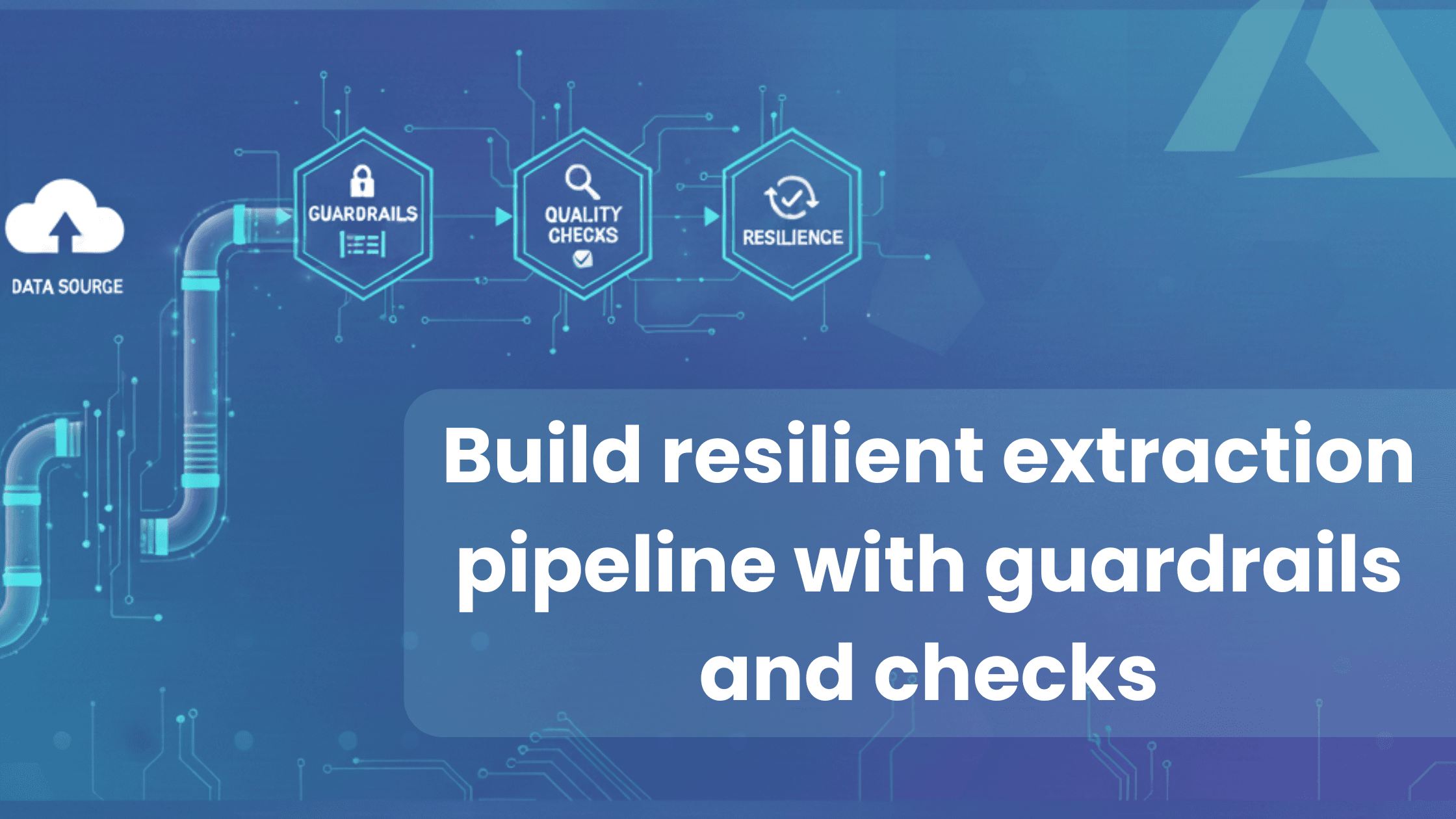
Strategies for Structured Extraction with Azure OpenAI
Turning Unstructured Documents into Gold
Executive Summary
Extracting meaningful, structured data from long, unstructured documents — especially legal contracts, insurance policies, or financial reports — has long been a challenge in enterprise automation. This comprehensive guide outlines proven best practices using Azure OpenAI's Structured Outputs to transform messy, variable-format text into clean, schema-aligned data ready for downstream systems.

Introduction
Recently, the Microsoft AI engineering team delivered a real-world solution using Azure OpenAI that transformed complex legal text into reliable, schema-aligned data. This approach not only improved accuracy but also made the extracted information instantly usable in downstream business systems such as CRMs, ERP platforms, and Power BI dashboards.
Let's walk through the core practices and patterns that made this solution successful — and how you can apply them in your next automation project.

Figure 1: Azure OpenAI enables intelligent transformation of unstructured documents into structured data
The Challenge: Chaos in Legal Text
Legal documents rarely follow a consistent pattern. Information can appear out of order, recur in multiple forms, or hide inside long clauses. The customer's goal was to populate a standardized form from hundreds of these documents, ensuring all fields were correct and complete.
Common challenges included:
- Scattered and non-linear placement of key data points
- Missing or conflicting values across sections
- Repetitions or rephrasings of the same details
- LLMs occasionally generating hallucinated field names or malformed JSON
The solution needed to ensure strict adherence to a fixed schema — with no missing or extra data.
Solution Overview: The Three-Pillar Approach
The implemented framework relied on three guiding principles to achieve consistent structured extraction:
- Chunked document processing
- Schema enforcement using Structured Outputs (via Pydantic)
- Iterative update logic for continuous refinement

1. Chunked Document Processing
Instead of feeding a huge document directly into the model, the team split the document into manageable chunks — typically by paragraph or section boundaries.
Each chunk was processed in sequence. After analyzing one chunk, the model would review whether any fields in the structured form needed to be created or updated.
Why it works:
- Keeps the model focused on relevant context
- Reduces hallucination risk caused by overloaded context windows
- Allows the system to "learn progressively" across the document

Figure 3: Intelligent document processing pipeline with sequential chunking and validation

2. Schema Enforcement with Structured Outputs
Azure OpenAI's Structured Outputs feature (available in Python, .NET, and REST APIs) ensures that model responses conform to a strict predefined schema, enforced by tools like Pydantic.
Here's an example schema used in the legal document extraction scenario:
from pydantic import BaseModel
class ContractData(BaseModel):
contract_title: str
contract_date: str
party_1_name: str
party_2_name: str
effective_date: str
term_length: str
payment_terms: str
termination_clause_summary: str
governing_law: str
implicit_obligations: str
By specifying this model, the system guaranteed that:
- Only valid fields were returned by the model
- Field order and hierarchy matched form expectations
- Any deviation or malformed JSON triggered validation errors
This technique eliminated hallucinated or missing fields, ensuring confidence in downstream systems.

Figure 4: Structured data validation enforces schema compliance and prevents malformed outputs

3. Iterative Update-on-Change Logic
Rather than regenerating the entire form after each chunk, the solution used smart update logic:
- If a previously extracted field remained valid, its value was preserved
- If new context offered a better or bn corrected value, only that field was updated
This incremental refinement allowed continuous improvement across chunks without redundant reprocessing.
Why it matters: This method balances efficiency (no excessive updates) with accuracy (progressive enrichment), achieving stability over long or inconsistent documents.
Synthesized Best Practices
Best Practice | Recommendation | Why It Matters |
Use Structured Outputs | Define your schema with Pydantic and use the response_format parameter in Azure OpenAI | Prevents hallucinated fields and malformed structures |
Chunk Input Intelligently | Split by meaning or paragraph, not arbitrary token count | Maintains contextual coherence and avoids truncation |
Iterative Field Updates | Only update fields when new chunks add value | Enhances precision and stability |
Avoid Free-form Generation | Don't ask LLMs to generate the entire form in one go | Minimizes inconsistent or incomplete results |
Table 1: Key best practices for structured extraction from documents

Industry Applications
By enforcing structure and applying iterative extraction, enterprises can confidently convert unstructured content into structured, automation-ready data across many industries:
- Healthcare → Populate clinical forms from discharge summaries
- Finance → Extract regulatory data from reports
- Insurance → Summarize claim details from policy text
- Logistics → Capture shipment data from packing slips

Figure 5: Document data extraction automates workflows across multiple industries
The result is both reliable and scalable AI automation — ready for integration with Power Apps, Power Automate, or Azure Data Factory pipelines.
Summary
By combining chunked processing, strict schema enforcement with structured outputs, and update-on-change logic, Azure OpenAI can reliably turn unstructured documents into clean, automation-ready data. This pattern reduces hallucinations, preserves field integrity, and scales across diverse domains like legal, healthcare, finance, insurance, and logistics[2].
The key to success is recognizing that structure is not a limitation — it's a guarantee. When you enforce rigid schemas at the model response level, you eliminate entire categories of errors that plague free-form extraction approaches.


Conclusion
Structured extraction is no longer just a research problem — it is a practical, production-ready capability when implemented with the right architectural patterns on Azure OpenAI[2].
Teams that invest in schema-first design, intelligent chunking, and iterative refinement unlock trustworthy data flows that feed downstream workflows, analytics, and decision-making with minimal manual intervention.
Whether you're processing legal contracts, insurance claims, financial statements, or logistics documents, the three-pillar approach outlined here provides a proven path to reliable, scalable, and maintainable automation.
The future of enterprise document processing is structured. Azure OpenAI makes it achievable today.
References
[1] Microsoft Azure Documentation. (2025). Structured Outputs in Azure OpenAI. Retrieved from https://learn.microsoft.com/en-us/azure/ai-services/openai/how-to/structured-outputs
Related Posts
Enterprise Cloud Migration Playbook: Coordinating Applications, Data, and Infrastructure
Enterprise Azure migration playbook: three pillars, five phases, proven risk reduction strategies.

Azure Migration Checklist & Cloud Readiness Assessment 2026: The Definitive Guide
Everything You Need for a Seamless Cloud Transition

Why Every Enterprise Is Moving to Azure in 2026: The Ultimate Migration Playbook
Everything organization needs to plan, execute and optimize a successful microsoft azure migration - from assessment to full cloud maturity