Can Azure Managed Services Help with Predictive Maintenance?
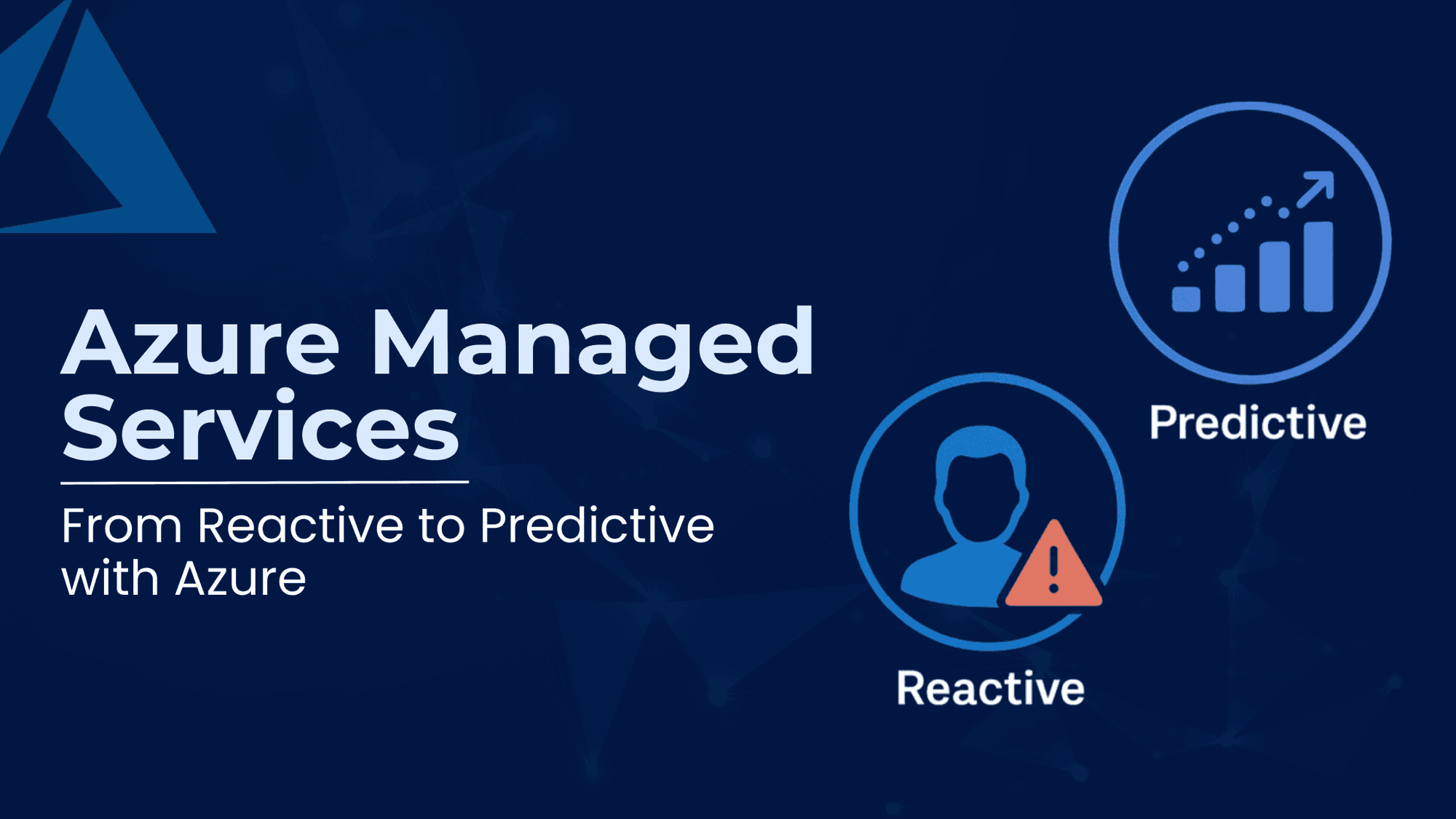
From Reactive to Predictive with Azure
Detroit’s industrial economy runs on uptime. Automotive suppliers, Tier-1 manufacturers, robotics integrators, logistics operators — all depend on equipment reliability. A single hour of unexpected downtime in a production line can cost thousands of dollars in lost output, penalties, and overtime.
Predictive maintenance promises to fix that problem. But deploying predictive models is only half the story. The real question decision-makers should ask is:
Can Azure Managed Services actually help operationalize and sustain predictive maintenance at scale?
The short answer: Yes — when structured correctly.
This guide explains how.
Understanding Predictive Maintenance in Industrial Environments
Predictive maintenance (PdM) uses real-time equipment data, historical performance trends, and machine learning models to predict failures before they occur.
Unlike:
- Reactive maintenance – fix after breakdown
- Preventive maintenance – scheduled maintenance regardless of condition
Predictive maintenance relies on:
- Sensor telemetry (temperature, vibration, pressure, current)
- Data pipelines
- Advanced analytics
- Continuous model training
- Infrastructure stability
The challenge isn’t building a model once. The challenge is keeping everything running reliably, securely, and cost-efficiently over time.
That’s where managed services become strategic.

What Are Azure Managed Services?
Azure Managed Services provide continuous monitoring, optimization, governance, and support for Microsoft Azure environments. Instead of internal teams handling infrastructure, patching, cost management, and incident response alone, a managed provider ensures:
- 24/7 monitoring
- Performance optimization
- Cost governance
- Security and compliance management
- Backup and disaster recovery
- Ongoing cloud architecture refinement
For predictive maintenance initiatives, this operational backbone is critical.
The Real Problem: Predictive Maintenance Fails Without Operational Support
Many manufacturers launch IoT and analytics projects but struggle with:
- Sensor data overload
- Broken data pipelines
- Cloud cost overruns
- Model drift
- Security vulnerabilities
- Skill gaps in AI infrastructure
Predictive models are dynamic. They require:
- Continuous tuning
- Data quality validation
- Infrastructure monitoring
- Secure access controls
- Performance optimization
Without managed oversight, predictive systems degrade quickly.

How Azure Managed Services Support Predictive Maintenance
1. Reliable IoT Data Ingestion
Predictive maintenance begins with data.
Azure IoT Hub and Azure Event Hub collect real-time telemetry from industrial equipment. Managed services ensure:
- Stable ingestion pipelines
- Secure device authentication
- Network optimization
- High availability architecture
In manufacturing-heavy regions like Detroit, real-time data reliability directly impacts production continuity.
2. Scalable Data Storage & Processing
Predictive workloads generate large volumes of machine data.
Azure Managed Services oversee:
- Azure Data Lake architecture
- Azure Synapse or Azure Databricks optimization
- Storage tiering strategies
- Query performance tuning
This ensures data remains accessible without spiraling infrastructure costs.

3. Machine Learning Lifecycle Management
Building a model is step one. Maintaining it is the real work.
Managed services help with:
- Model retraining cycles
- Performance monitoring
- Drift detection
- Version control
- Deployment automation
This prevents prediction accuracy from degrading over time.
4. Infrastructure Monitoring & Uptime
Predictive maintenance systems must run continuously.
Azure Managed Services provide:
- 24/7 monitoring
- Automated alerting
- Incident response
- Patch management
- SLA-backed uptime
Downtime in a predictive system defeats its purpose.
5. Security & Compliance
Industrial environments are increasingly targeted by cyber threats.
Managed services implement:
- Zero-trust architecture
- Identity & access management
- Endpoint protection
- Data encryption
- Regulatory compliance controls
For automotive and manufacturing firms, compliance is non-negotiable.
Why Detroit Manufacturers Benefit Significantly
Detroit’s economy includes:
- Automotive OEMs
- Tier-1 suppliers
- Advanced robotics
- Logistics hubs
- Industrial automation companies
These industries depend on:
- Robotics uptime
- Assembly-line precision
- Equipment longevity
- Supply chain continuity
Azure Managed Services enable predictive maintenance systems that:
- Reduce unplanned downtime by 30–50%
- Extend machinery lifespan
- Lower maintenance labor costs
- Improve forecasting accuracy
- Enhance safety compliance
For local enterprises already investing in digital transformation, managed Azure environments create long-term operational stability.

Commercial Impact: Is It Worth the Investment?
From a business perspective, predictive maintenance powered by Azure delivers measurable ROI.
Cost Savings
Unexpected equipment failure can cost thousands per hour. Early failure detection reduces emergency repair costs and production disruption.
Asset Optimization
Condition-based maintenance extends equipment lifespan and delays capital expenditure.
Workforce Efficiency
Technicians shift from reactive repair to planned intervention.
Competitive Advantage
Reliable operations increase customer trust and supply chain resilience.
However, these benefits are sustainable only when infrastructure, data pipelines, and AI models remain continuously optimized.
That is the operational value of Azure Managed Services.
Why Managed Services Are Better Than In-House Alone
Internal IT teams often face:
- Limited Azure specialization
- Resource constraints
- Competing priorities
- 24/7 monitoring limitations
Managed services provide:
- Dedicated Azure expertise
- Structured governance frameworks
- Cost optimization strategies
- Proactive monitoring
- Scalable architecture support
This hybrid model allows internal teams to focus on innovation while managed providers ensure operational continuity.
Implementation Approach for Predictive Maintenance on Azure
A structured deployment typically includes:
- Cloud readiness assessment
- IoT architecture design
- Data lake and analytics setup
- ML model deployment
- Managed monitoring and optimization
Enterprises that integrate predictive maintenance within a managed Azure framework scale faster and reduce operational risk.
Strategic Consideration for Detroit Businesses
If your organization operates industrial equipment, robotics systems, or logistics assets in Michigan, predictive maintenance is no longer optional.
The real strategic question is:
Will you maintain it internally with limited bandwidth, or implement it with a structured Azure Managed Services model designed for scale and resilience?
The right partner ensures your predictive infrastructure:
- Remains secure
- Stays cost-efficient
- Evolves with your data
- Supports long-term transformation goals
Final Thought
Predictive maintenance is not just a technology upgrade. It is an operational transformation strategy.
Azure provides the platform. Managed services provide the operational discipline.
Together, they help Detroit’s industrial businesses move from reactive maintenance cycles to intelligent, data-driven resilience.
If implemented strategically, Azure Managed Services do not just support predictive maintenance — they make it sustainable, secure, and commercially viable.

Frequently Asked Questions
1. What is predictive maintenance in Azure?
Predictive maintenance in Azure uses IoT data, analytics tools, and machine learning models to predict equipment failures before they occur, helping organizations reduce downtime and optimize asset performance.
2. Can Azure Managed Services reduce downtime?
Yes. Managed services provide continuous monitoring, proactive alerting, and infrastructure optimization, ensuring predictive systems operate reliably and minimizing unexpected equipment or cloud infrastructure disruptions.
3. Is Azure suitable for manufacturing predictive maintenance?
Azure offers IoT, data analytics, and AI capabilities ideal for manufacturing environments, enabling scalable predictive maintenance systems across production lines and industrial equipment networks.
4. How does Azure support real-time equipment monitoring?
Azure IoT Hub and Event Hub collect real-time telemetry from connected devices, while analytics tools process data instantly to identify anomalies and potential equipment failures.
5. What industries benefit most from predictive maintenance?
Manufacturing, automotive, logistics, energy, and industrial automation sectors benefit most due to heavy equipment reliance and high costs associated with unplanned downtime.
6. Does predictive maintenance require ongoing management?
Yes. Models require retraining, infrastructure requires monitoring, and security must be maintained continuously, making managed services essential for long-term performance and accuracy.
7. How long does it take to implement predictive maintenance on Azure?
Implementation timelines vary but typically range from 8 to 16 weeks depending on IoT complexity, data readiness, infrastructure scale, and integration requirements.
8. Can small or mid-sized businesses use Azure Managed Services?
Yes. Azure’s scalable architecture allows mid-sized enterprises to adopt predictive maintenance solutions with managed oversight tailored to their operational and budget requirements.

Related Posts
Azure Migration Checklist & Cloud Readiness Assessment 2026: The Definitive Guide
Everything You Need for a Seamless Cloud Transition

Why Every Enterprise Is Moving to Azure in 2026: The Ultimate Migration Playbook
Everything organization needs to plan, execute and optimize a successful microsoft azure migration - from assessment to full cloud maturity

How Detroit Manufacturing Companies Are Using Cloud Data Storage to Scale Operations
Cloud-powered data storage for modern manufacturing