

Azure
How Detroit Manufacturing Companies Are Using Cloud Data Storage to Scale Operations
Cloud-powered data storage for modern manufacturing

Detroit's manufacturing sector has always been defined by scale, precision, and resilience. From automotive and mobility to industrial equipment and advanced materials, manufacturers across the region are operating in increasingly data-intensive environments. What's changed over the last decade isn't the ambition to scale — it's how that scale is achieved.
Today, cloud data storage has become a foundational enabler for Detroit manufacturers seeking to modernize their operations, enhance visibility, and respond more quickly to market demands, not as a buzzword initiative, but as a practical, business-driven shift.
This article explores how manufacturing organizations in and around Detroit are using cloud data storage to scale intelligently, and why it's becoming a strategic necessity rather than an IT upgrade.
The Manufacturing Data Challenge: Growth Without Complexity
Modern manufacturing generates data at an unprecedented rate:
- Production line sensor data
- ERP and supply chain transactions
- Quality inspection images and logs
- Engineering and design files
- Predictive maintenance data from connected equipment
For many established manufacturers, this data lives across legacy on-prem systems, plant-level servers, and siloed applications. As operations expand new facilities, suppliers, or product lines the infrastructure struggles to keep up.
Common challenges include:
- Limited scalability during demand spikes
- High infrastructure maintenance costs
- Delayed access to real-time operational data
- Difficulty integrating plant data with analytics and AI initiatives
Cloud data storage addresses these issues by offering elastic scale, centralized access, and seamless integration with modern analytics platforms — without disrupting core manufacturing processes.

Why Cloud Data Storage Makes Sense for Detroit Manufacturers
Detroit manufacturers tend to operate at enterprise scale, often across multiple plants, suppliers, and logistics partners. Cloud data storage aligns well with these realities.
1. Elastic Scale Without Capital Overhead
Manufacturers no longer need to over-provision storage for peak demand. Cloud platforms allow them to scale storage dynamically — whether it's onboarding a new production facility or retaining years of historical data for compliance and analysis.
2. Unified View Across Plants and Systems
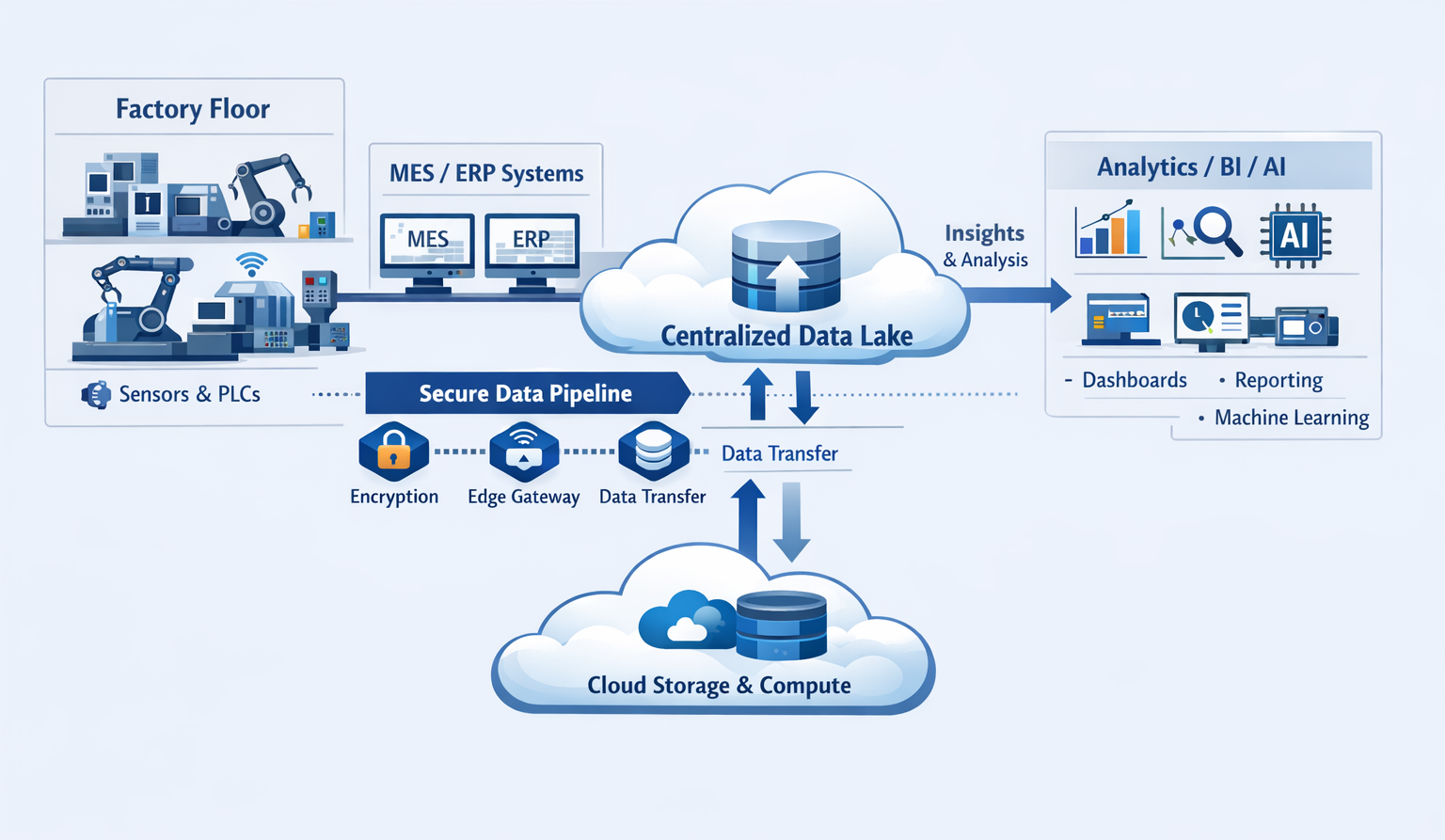
Cloud storage acts as a centralized data layer, enabling manufacturers to consolidate:
- Plant-level operational data
- Supply chain information
- Quality and compliance records
This unified view supports better decision-making across engineering, operations, and leadership teams.
3. Faster Access to Insights
When production, quality, and logistics data is stored centrally, it becomes easier to feed analytics, BI dashboards, and AI models — turning raw data into actionable insight.
Real-World Use Cases Gaining Traction
Detroit manufacturers aren't adopting cloud storage in isolation. It's typically part of a broader digital modernization strategy.
Smart Manufacturing and Connected Plants
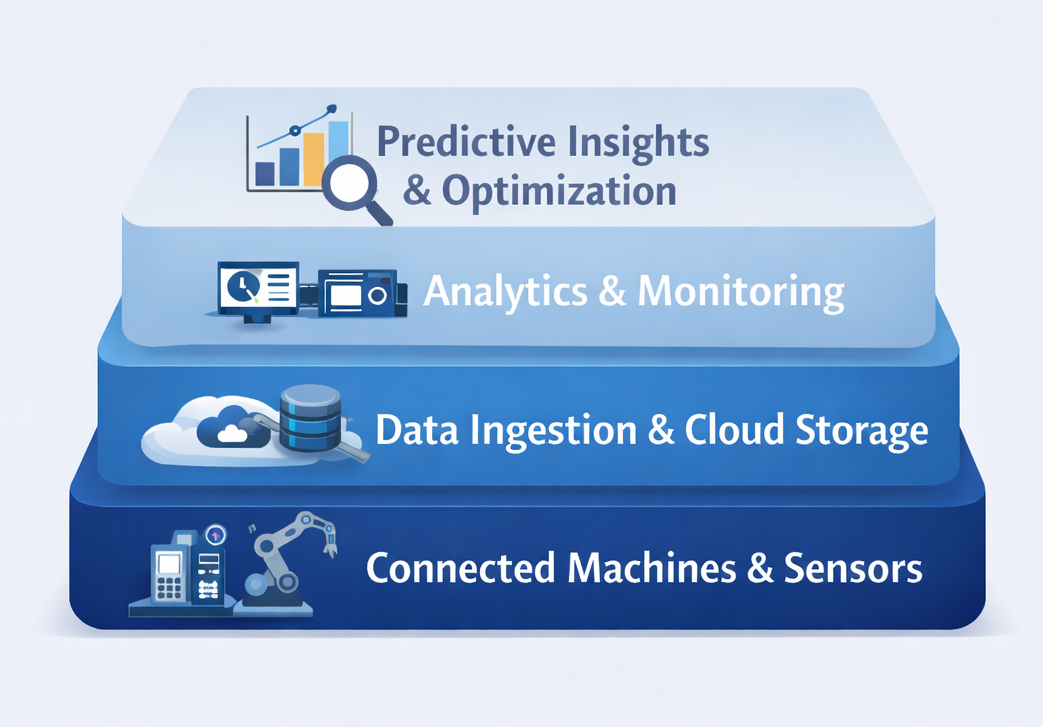
Manufacturers are using cloud storage to collect and store high-volume IoT data from machinery and production lines. This enables:
- Predictive maintenance
- Reduced unplanned downtime
- Performance benchmarking across facilities
Instead of processing everything locally, data is stored centrally and analyzed using cloud-native tools.
Supply Chain Visibility and Resilience
Recent disruptions highlighted the need for better supply chain transparency. Cloud data storage allows manufacturers to:
- Aggregate supplier, inventory, and logistics data
- Track performance trends over time
- Respond faster to material shortages or delays
This is particularly relevant for Detroit manufacturers operating within complex automotive and industrial supply ecosystems.
Quality Management and Traceability
Cloud storage supports long-term retention of quality inspection data, images, and test results. This improves:
- Traceability for audits and compliance
- Root cause analysis for defects
- Continuous quality improvement initiatives
Supporting Advanced Analytics and AI Initiatives
Many Detroit manufacturers are actively exploring advanced analytics, machine learning, and AI-driven optimization. These initiatives depend heavily on accessible, well-structured data.
Cloud data storage enables:
- Integration with analytics platforms like Databricks, Azure Synapse, or Snowflake
- Faster experimentation with AI models
- Secure access for data science and engineering teams
Instead of migrating data repeatedly between systems, cloud storage provides a stable foundation for innovation.
Security, Compliance, and Data Governance — Done Right
For enterprise manufacturers, security and compliance are non-negotiable. Modern cloud platforms offer robust capabilities that often exceed traditional on-prem environments:
- Encryption at rest and in transit
- Role-based access control
- Audit logs and compliance certifications
- Data residency and retention controls
When implemented with the right governance model, cloud data storage strengthens security while maintaining regulatory alignment — especially important for manufacturers serving regulated industries.
Hybrid and Multi-Cloud: A Practical Path Forward
Few manufacturers move everything to the cloud overnight. Instead, Detroit organizations often adopt hybrid or multi-cloud strategies:
- Retaining latency-sensitive workloads on-prem
- Using cloud storage for analytics, backups, and data lakes
- Gradually modernizing legacy systems
This phased approach reduces risk while delivering measurable value early in the transformation journey.
The Role of Strategic Cloud Partners
Successful cloud data storage adoption isn't just about technology — it's about execution. Manufacturers benefit from partners who understand:
- Manufacturing workflows and plant operations
- Data integration across legacy and modern systems
- Security, governance, and compliance requirements
- Industry-specific scaling challenges
A well-designed cloud data strategy aligns IT modernization with operational outcomes — cost efficiency, agility, and long-term scalability.
Looking Ahead: Data as a Competitive Advantage
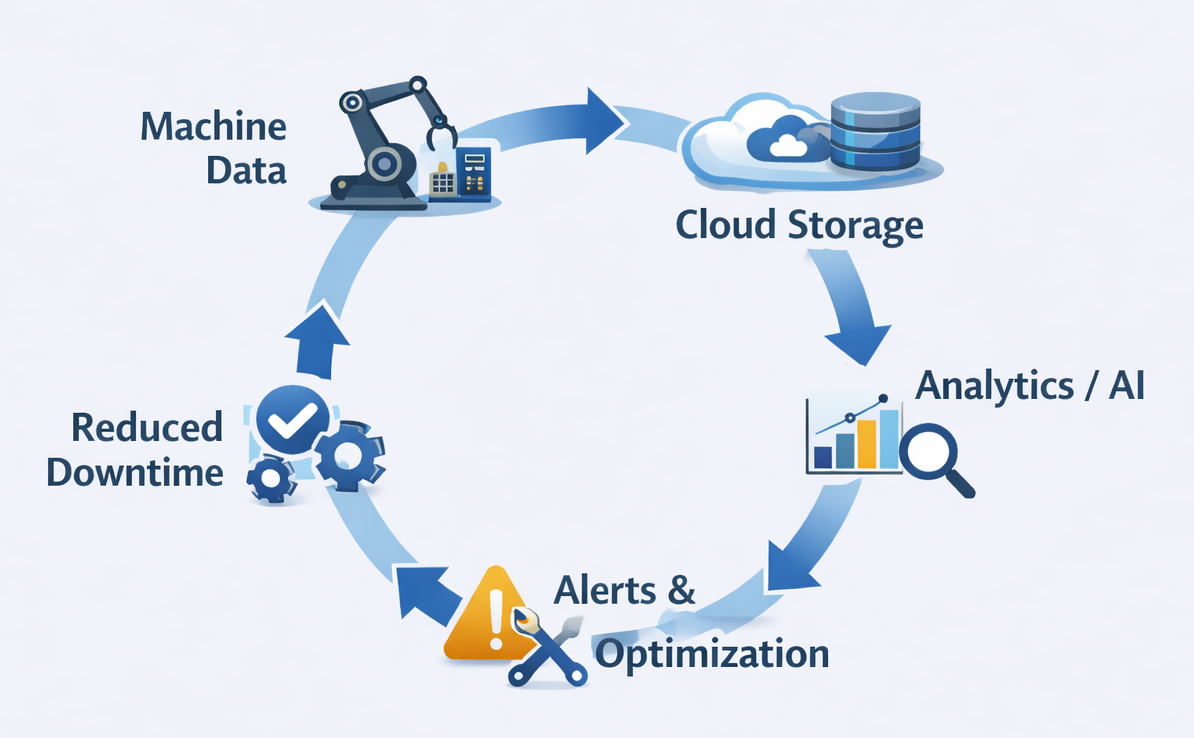
Detroit's manufacturing future is increasingly data-driven. Cloud data storage is no longer a back-office infrastructure decision; it's a strategic investment that supports:
- Operational resilience
- Faster innovation cycles
- Enterprise-wide visibility
- Sustainable growth
Manufacturers that treat data as a shared, scalable asset — rather than a byproduct of operations — are better positioned to compete in a rapidly evolving industrial landscape.

Final Thought
Cloud data storage isn't about replacing manufacturing expertise — it's about amplifying it. For Detroit manufacturers navigating modernization, expansion, and digital transformation, the cloud provides the flexibility and intelligence needed to scale with confidence.
Frequently Asked Questions
1. How does cloud data storage help manufacturing companies scale operations?
Cloud data storage allows manufacturers to expand storage capacity on demand, centralize data across plants, and support analytics without investing in additional on-prem infrastructure. This makes it easier to scale production, onboard new facilities, and respond to market changes efficiently.
2. Is cloud data storage suitable for large, legacy manufacturing environments?
Yes. Most manufacturers adopt a hybrid approach, integrating cloud storage with existing ERP, MES, and plant systems. This allows organizations to modernize data management without disrupting critical production workflows.
3. What types of manufacturing data are typically stored in the cloud?
Manufacturers commonly store production logs, sensor and IoT data, quality inspection records, supply chain data, engineering documents, and historical operational data in the cloud to support analytics, reporting, and compliance needs.
4. How secure is cloud data storage for manufacturing data?
Leading cloud platforms provide enterprise-grade security, including encryption, role-based access, audit logging, and compliance certifications. When paired with proper governance and access controls, cloud storage often meets or exceeds traditional on-prem security standards.
5. Can cloud data storage support real-time manufacturing analytics?
Yes. Cloud storage integrates seamlessly with analytics and data platforms, enabling near real-time analysis of production, quality, and supply chain data. This supports predictive maintenance, performance optimization, and faster operational decision-making.